
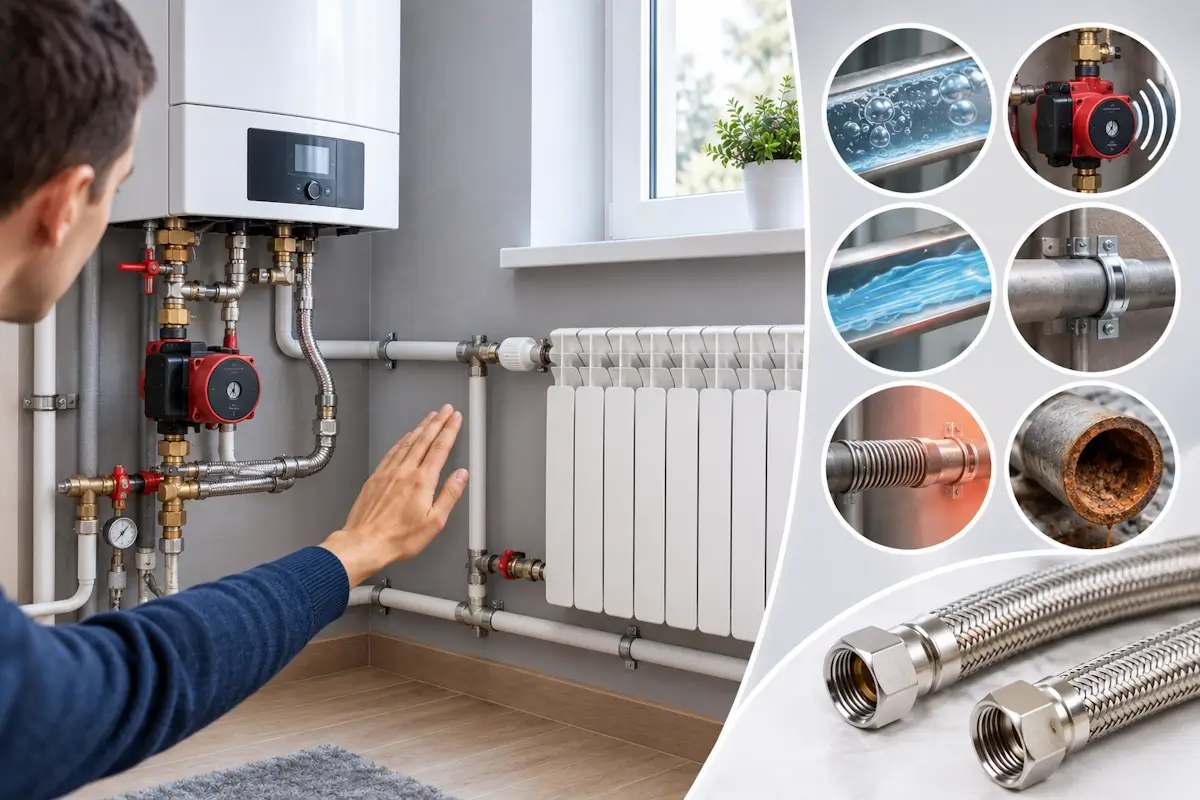
 Noise in heating pipes is a common problem that can occur in both private houses and apartment buildings. Humming, whistling, gurgling, clicking and knocking noises not only cause discomfort but may also indicate problems with the heating system.
There can be several causes of unusual noises, ranging from air trapped in the pipework to incorrect circulation pump settings, hydraulic imbalance or thermal expansion of the pipes. To eliminate the noise, it is necessary to identify its source first and then choose an appropriate solution.
Why Are Heating Pipes Noisy?
Unusual noises in a heating system can result from the movement of the heating medium, equipment vibration, mechanical contact between pipes and building structures, or changes in pipeline pressure. The type of noise often helps identify the likely cause of the problem.
1. Air in the Heating System
One of the most common causes of noise is air accumulating in pipes and radiators. Airlocks interfere with the normal circulation of the heating medium, causing gurgling, bubbling sounds and uneven radiator heating.
Air can enter the system during filling, repair work or as a result of faults in individual components.
How to solve the problem:
- Check whether the radiators are heating evenly.
- Release air through dedicated air vents, if the system design allows it.
- Check the heating medium pressure after removing the air.
- If necessary, check the operation of automatic air vents and the system’s leak-tightness.
If air regularly accumulates in the pipes, simply venting it may not be enough. The cause of air entering the system must be identified.
2. Incorrect Circulation Pump Operation
A circulation pump moves the heating medium through the pipes and radiators. If it operates at an excessively high speed or is incorrectly configured, the system may produce humming, whistling and vibration.
Noise can also be caused by worn bearings, a dirty impeller, air inside the pump or insufficient pressure at the pump inlet.
How to solve the problem:
- Check the pump speed settings and operating mode.
- Make sure the shut-off valves are in the correct position.
- Check the condition of the filter upstream of the pump, if one is installed.
- If necessary, service the pump or replace worn components.
Do not simply set the pump to its minimum speed. Although this may reduce noise, it can also lead to inadequate heating in some rooms. The operating mode should be selected according to the characteristics of the heating system.
3. Excessive Heating Medium Flow Velocity
If water moves through the pipes too quickly, turbulent flow may develop around valves, restrictions and bends. This can cause whistling, hissing and other characteristic noises.
Possible causes include incorrectly sized pipes, excessive pump output or improperly adjusted control valves.
How to solve the problem:
- Check whether the pipe diameters are suitable for the calculated heating medium flow rate.
- Make sure that valves and taps are installed and adjusted correctly.
- Adjust the pump output to meet the requirements of the system.
- If necessary, carry out hydraulic balancing.
Hydraulic balancing distributes the heating medium among the heating appliances according to their individual requirements. This helps reduce noise and provides more even heating throughout the building.
4. Thermal Expansion of Pipes
When heated, pipe materials expand; when cooled, they contract. If pipes are rigidly fixed, pass through floors or walls without sufficient clearance, or come into contact with walls, they may produce clicking, cracking or intermittent knocking sounds.
These noises are particularly noticeable when the heating system starts up and the temperature of the heating medium changes rapidly.
How to solve the problem:
- Check the pipe supports and mounting brackets.
- Eliminate unwanted contact between the pipework and building structures.
- Make sure that any expansion sections provided by the system design can move freely.
- If necessary, install suitable thermal expansion compensators.
Thermal movement must be taken into account during installation. Properly selected supports, brackets and expansion components help reduce mechanical loads and unwanted noise.
5. Vibration Transmitted from Equipment
Boilers, circulation pumps and other heating equipment can generate vibration during operation. If this vibration is transmitted to the pipework, noise can travel through the system and be heard even in distant rooms.
Possible causes include improperly mounted equipment, worn supports, mechanical faults or rigid connections between the pump and the pipes.
How to solve the problem:
- Check the pump mounting and equipment support components.
- Inspect the pipework for contact with walls and other structures.
- Check the condition of the pump and other potential sources of vibration.
- If necessary, install suitable vibration-isolation components.
In systems with circulation pumps, special flexible connectors or vibration dampers can be used to reduce the transmission of mechanical vibrations. They must be selected according to the operating pressure, heating medium temperature and installation requirements.
6. Dirt and Deposits in Pipes and Filters
Over time, corrosion products, sludge, scale and other deposits may accumulate in a heating system. These deposits reduce the effective flow area of the pipes and interfere with the circulation of the heating medium.
As a result, whistling, uneven radiator heating and increased pump load may occur.
How to solve the problem:
- Check the condition of the coarse filters.
- Assess the operation of the pump and control valves.
- Flush the heating system if necessary.
- Check the quality of the heating medium and follow the equipment manufacturer’s recommendations.
Pipework should be flushed only after assessing the condition of the system. In older networks, aggressive cleaning without prior inspection may damage weakened sections.
How to Reduce Noise in Heating Pipes Yourself
Before calling a specialist, you can carry out a preliminary inspection of the system. Do not dismantle equipment or perform dangerous operations involving hot heating medium.
It is recommended to proceed step by step:
- Identify the type of noise. Gurgling is often associated with trapped air, whistling with the flow of the heating medium or valves, and clicking with thermal expansion.
- Locate the source of the noise. Check whether the noise comes from a single radiator, a particular section of pipework or the entire system.
- Check radiator operation. Look for uneven heating and signs of trapped air.
- Inspect accessible pipe supports. Make sure the pipes are not touching walls, floors or other structures in places where this could cause noise.
- Check the pressure readings. Compare them with the recommended values for the specific system and boiler.
- Assess pump operation. If the noise occurs when the pump starts or changes with its speed, check the settings and technical condition of the equipment.
For example, if a radiator starts gurgling and heats unevenly after the heating system is switched on, an airlock may be the cause. If the problem persists after the air has been properly released, the system’s circulation and pressure should be checked.
If you hear loud knocking, notice a sudden increase in vibration, discover a leak or observe rapid pressure changes, contact a qualified specialist. For a heating system with a gas boiler, follow the manufacturer’s instructions and do not attempt to service the gas equipment yourself.
How to Reduce Heating System Noise During Installation
Many noise problems can be prevented during the design and installation stages of a heating system.
To achieve this:
- Calculate the pipe diameters and heating medium flow rate correctly.
- Select a circulation pump that matches the hydraulic characteristics of the system.
- Provide a means of removing trapped air.
- Carry out hydraulic balancing.
- Secure the pipework correctly and allow for thermal expansion.
- Use suitable vibration-isolation and expansion-compensation components.
- Ensure access to filters, valves and components that require maintenance.
Pay particular attention to the connection points for boilers, heat pumps and circulation equipment. Thermal expansion, mechanical vibration and hydraulic loads can all occur in these areas.
Can Stainless Steel Flexible Hoses Help Reduce Heating System Noise?
Flexible stainless steel hoses and metal hoses are used in heating systems to connect equipment, accommodate small movements and simplify installation. Under suitable conditions, they can also help reduce the transmission of vibration between equipment and pipework.
The corrugated design allows the hose to bend and accommodate certain movements that occur during system operation. This is particularly useful when connecting pumps, boilers and other equipment that generates mechanical vibration.
However, it is important to understand that a flexible stainless steel hose does not eliminate every cause of noise. It does not replace air removal, hydraulic balancing, correct pump adjustment or the repair of faulty components.
Conclusion
Noise in heating pipes can be caused by airlocks, incorrect circulation pump operation, excessive heating medium flow velocity, thermal expansion of pipes or vibration transmitted from equipment.
To resolve the problem, identify the underlying cause, inspect the system and carry out adjustments, cleaning or repairs as required. If the noise is caused by mechanical vibration, also check the pipe supports and consider using suitable vibration-isolation components.
Correct installation, regular maintenance and the use of components selected for the operating conditions help make a heating system quieter, more reliable and longer-lasting.
