
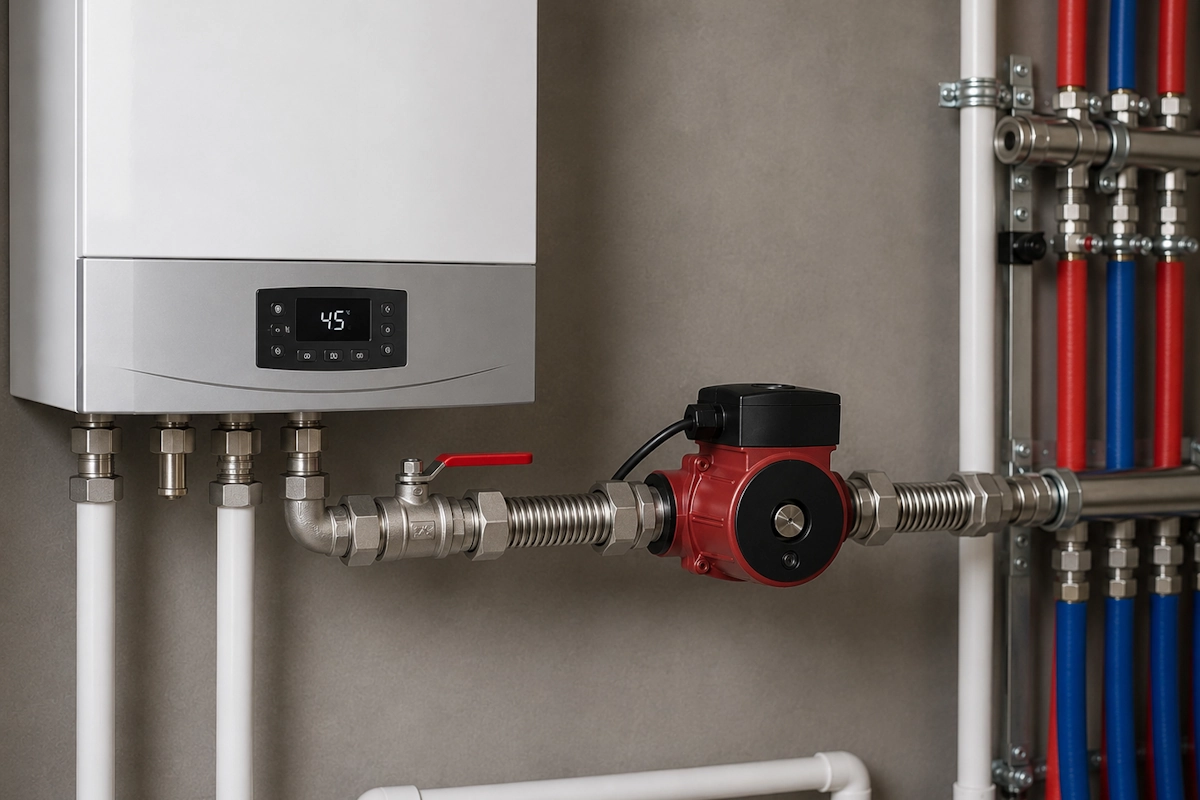
 The circulation pump is one of the most important elements of a modern heating system. It is the one which ensures the continuous movement of the coolant through pipes, radiators or underfloor heating circuits. In normal operation, the pump operates almost silently. If there is a hum, buzz, vibration or extraneous sounds, this indicates certain malfunctions or installation errors.
In this article, we will look at the most common reasons why the pump in the heating system is humming, and what needs to be done to fix the problem.
1. Air in the heating system
One of the most common causes of noise is air getting into the system. Air plugs disrupt the normal circulation of the coolant, which causes the pump to work with increased load. Symptoms:
- gurgling or bubbling;
- uneven heating of radiators;
- periodic hum of the pump.
How to fix the problem? It is necessary to bleed air through radiator air vent or automatic air vents and check the pressure in the system.
2. Improper pump installation
The circulation pump must be installed in accordance with the manufacturer’s recommendations. Most often, problems arise due to incorrect rotor position.
If the shaft is located vertically instead of horizontally, the bearings can operate with increased load, which causes noise.
It is also worth checking the direction of movement of the coolant – the arrow on the pump housing must correspond to the actual direction of flow.
3. Impeller contamination
Over time, scale, rust, sealant residues, mechanical impurities and other foreign substances accumulate in the coolant. They can get on the impeller and cause extraneous noises or even reduce the pump’s performance.
Solution. It is necessary to clean the pump and install a mud filter or check the condition of the already installed filter.
4. Excessive pump speed
If the pump capacity significantly exceeds the system needs, the coolant speed becomes too high. The pump must be selected by flow rate and pressure in accordance with the parameters of a specific heating system.
Many modern pumps have several speed modes. If the maximum speed is set unnecessarily, this will lead to excessive electricity consumption. This may cause hum, flow noise, and increased pipe vibration. In most private homes, an average operating mode is sufficient.
5. Bearing wear
After many years of operation, bearings can gradually wear out. Typical symptoms:
- steady metallic hum;
- vibration of the body;
- noise intensifies with increasing speed.
In this case, the pump needs to be repaired or replaced.
6. Cavitation
Cavitation occurs when the pressure at the pump inlet becomes too low. Microbubbles form inside the pump, which collapse during the movement of the coolant, creating a characteristic noise. The reasons may be:
- insufficient pressure in the system;
- clogging of pipes;
- incorrectly selected pump;
- too high coolant temperature.
7. Transmission of vibrations to pipelines
Even a fully functional pump can create minor mechanical vibrations. If the pump is rigidly connected to the pipeline, these vibrations are transmitted throughout the system, causing a hum that can be heard well in the house. This is especially noticeable:
- in boiler rooms;
- near heat pumps;
- near electric boilers;
- in multi-circuit systems.
How to reduce noise?
An effective solution is to install corrugated stainless steel hoses between the pump and the pipeline. They:
- compensate for vibrations;
- reduce noise transmission to pipes;
- compensate for small temperature deformations;
- simplify equipment installation.
It is especially effective to use high-quality Eco-Flex corrugated water hoses, which are characterized by high flexibility, resistance to temperature loads and long service life.
How to prevent noise
To ensure that the circulation pump operates quietly and for a long time, it is recommended:
- correctly select the pump according to the characteristics;
- regularly clean the filters;
- monitor the pressure in the system;
- remove air in a timely manner;
- use high-quality coolant;
- install flexible corrugated stainless steel hoses to compensate for vibrations;
- carry out preventive maintenance before the start of the heating season.
Conclusion
If the pump in the heating system has started to hum, you should not ignore the problem. In most cases, the cause is air in the system, improper installation, contamination, wear of parts or transmission of vibrations to the pipelines.
Timely diagnostics will help to avoid expensive repairs, and the use of Eco-Flex stainless steel corrugated hoses will significantly reduce the noise level, protect the pipeline from vibrations and increase the reliability of the entire heating system.
