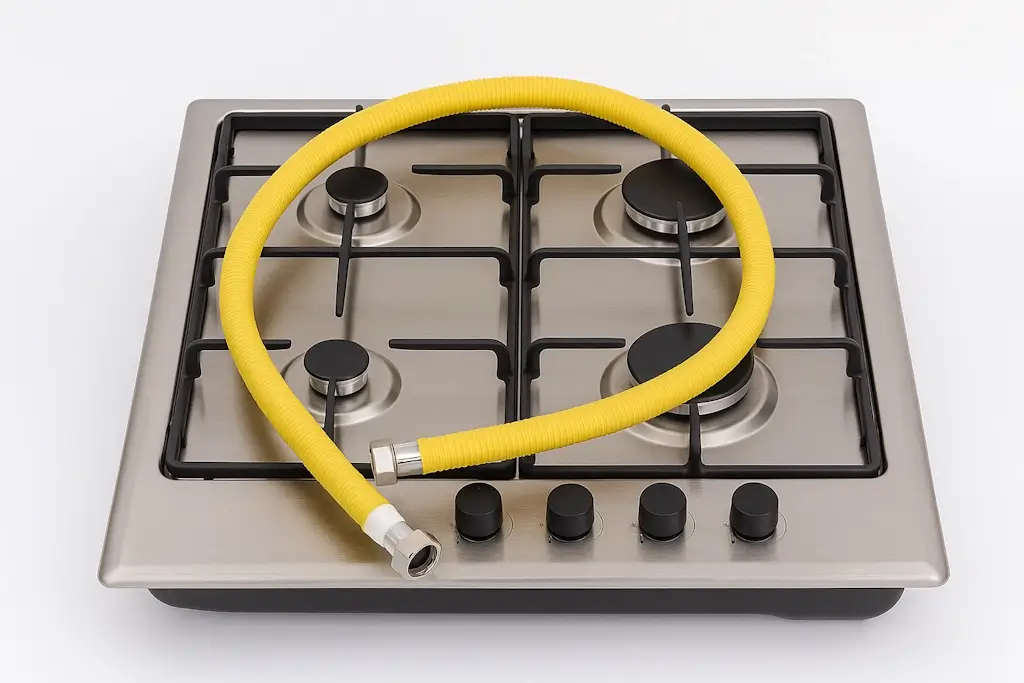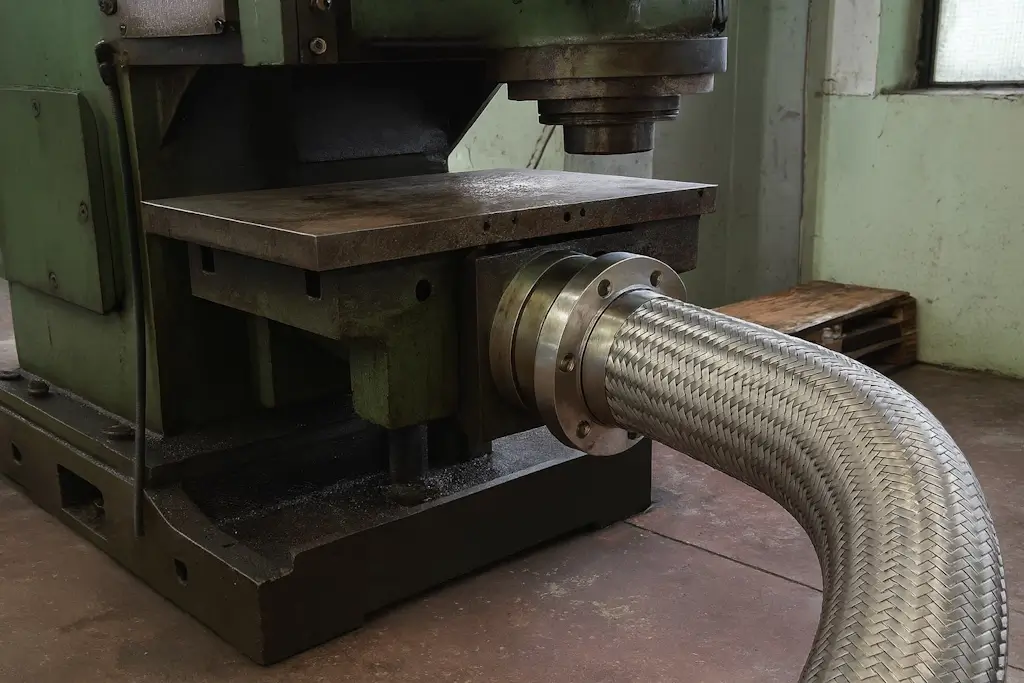
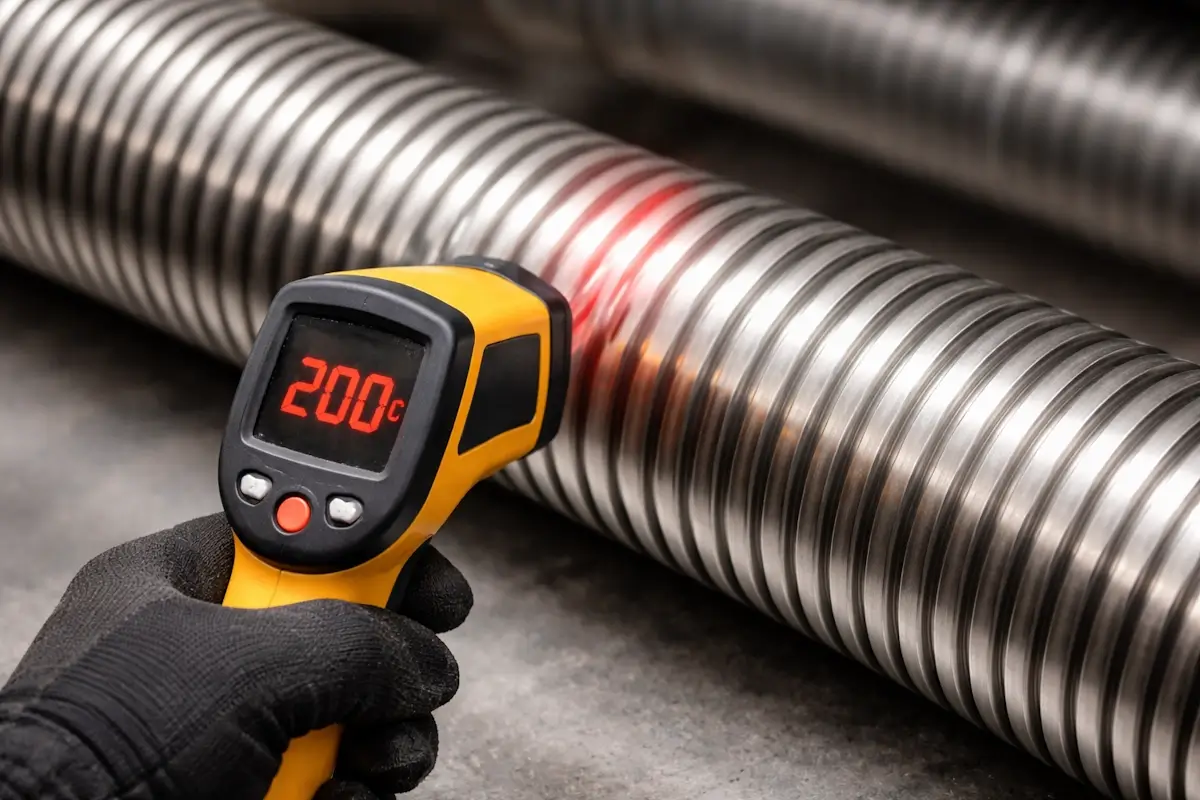
Stainless steel metal hoses are widely used in industry, energy, gas systems, and mechanical engineering. They provide pipeline flexibility and compensate for vibration and thermal deformation. However, one of the key factors directly affecting their service life and reliability is the temperature of the working medium.
In this article, we will examine how temperature affects the longevity of metal hoses and what to consider when selecting them.
How does temperature affect metal hoses?
Temperature affects the physical and mechanical properties of stainless steel. As temperature increases or decreases, the following changes:
- material strength;
- ductility;
- fatigue resistance;
- corrosion resistance.
These factors determine the overall service life of the metal hose.
High temperatures: main risks
When operating at high temperatures (above 400°C), the following processes occur:
- Strength reduction. Stainless steel gradually loses its strength, which can lead to deformation or even failure of the corrugation.
- Material creep. Prolonged exposure to high temperatures causes slow plastic deformation even without additional load.
- Fatigue failure. Cyclic temperature loads (heating and cooling) cause microcracks, which eventually lead to rupture.
- Oxidation. At high temperatures, surface oxidation increases, especially in harsh environments.
Low Temperatures: What’s Happening?
At low temperatures (below -50°C), other problems are observed:
- increased material brittleness;
- decreased impact strength;
- risk of sudden failure under mechanical stress.
This is especially critical for systems operating outdoors or in cold climates.
Temperature cycles and their influence
One of the most dangerous factors is frequent temperature changes. Under cyclic loading:
- the metal expands and contracts;
- stresses arise in the corrugated structure;
- fatigue wear accelerates.
This is especially true for:
- exhaust systems;
- boiler equipment;
- generators.
How to select the right metal hose based on temperature
To ensure maximum resource, it is important to consider:
- Steel grade. For example:
- AISI 304 – for medium temperatures;
- AISI 316 – for aggressive environments;
- AISI 321 – for high temperatures (better heat resistance).
- Operating temperature range. Always consider not only the maximum but also the minimum temperature.
- Presence of a protective braid. The braid reduces mechanical stress and increases service life.
- Compensation for thermal expansion. Proper installation avoids unnecessary stress.
How to extend the service life of a metal hose
Practical recommendations:
- Avoid exceeding temperature limits;
- Minimize sudden temperature changes;
- Provide proper calculation of the bending radius;
- Use metal hoses of the appropriate steel grade;
- Regularly inspect for damage.
Conclusion
Temperature is one of the key factors determining the service life of stainless steel metal hoses. Both excessive heating and extreme cooling can significantly reduce the product’s service life.
Proper material selection, consideration of operating conditions, and adherence to installation recommendations can significantly increase the reliability and durability of metal hoses, even in challenging conditions.