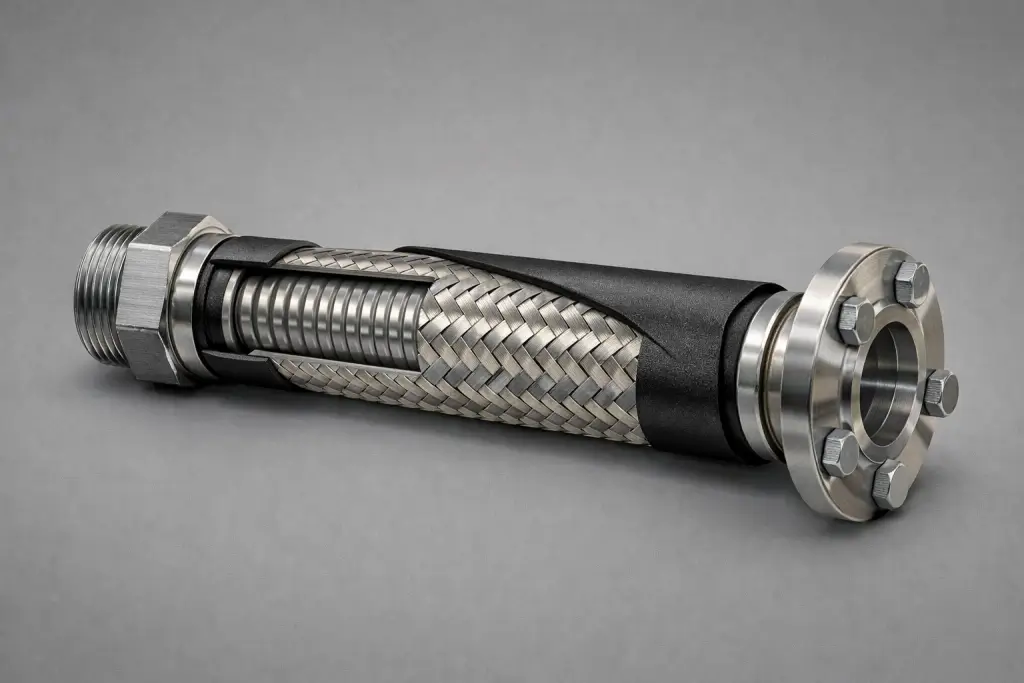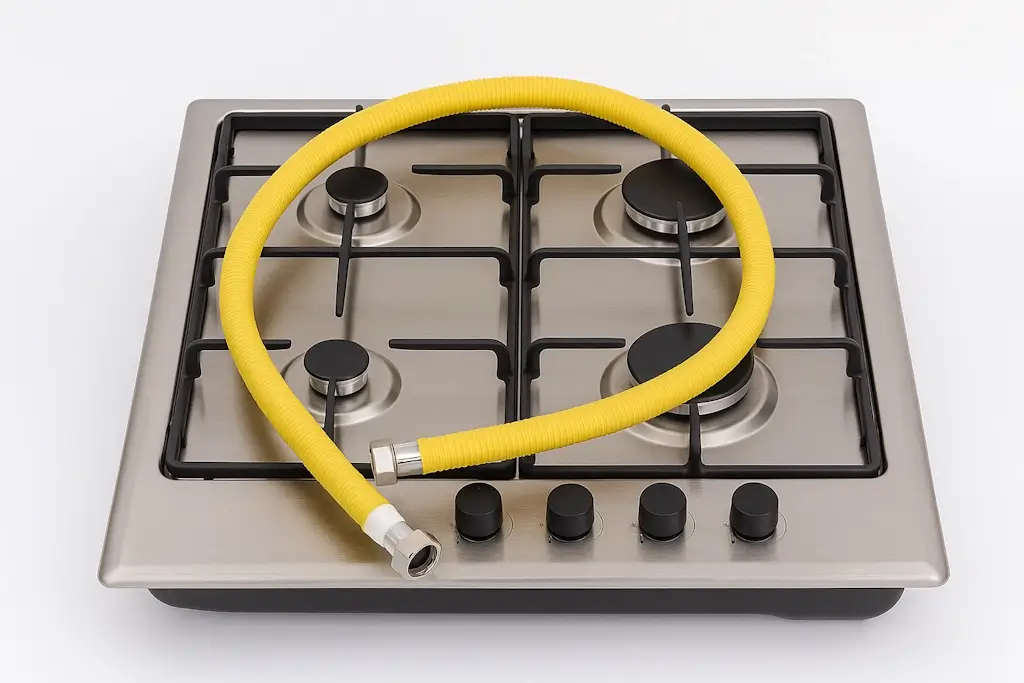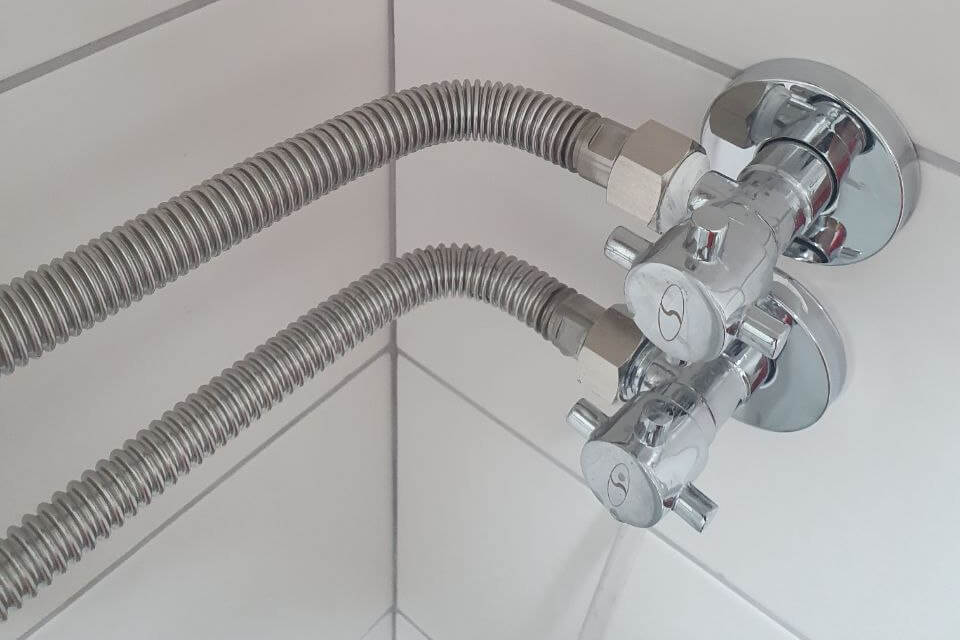
Flexible metal hoses are an important part of many process systems: from heating and air conditioning to chemical, food and marine applications. They must be reliable, durable and resistant to corrosion – and it is the material of the hose that largely determines how successfully it will perform its functions.
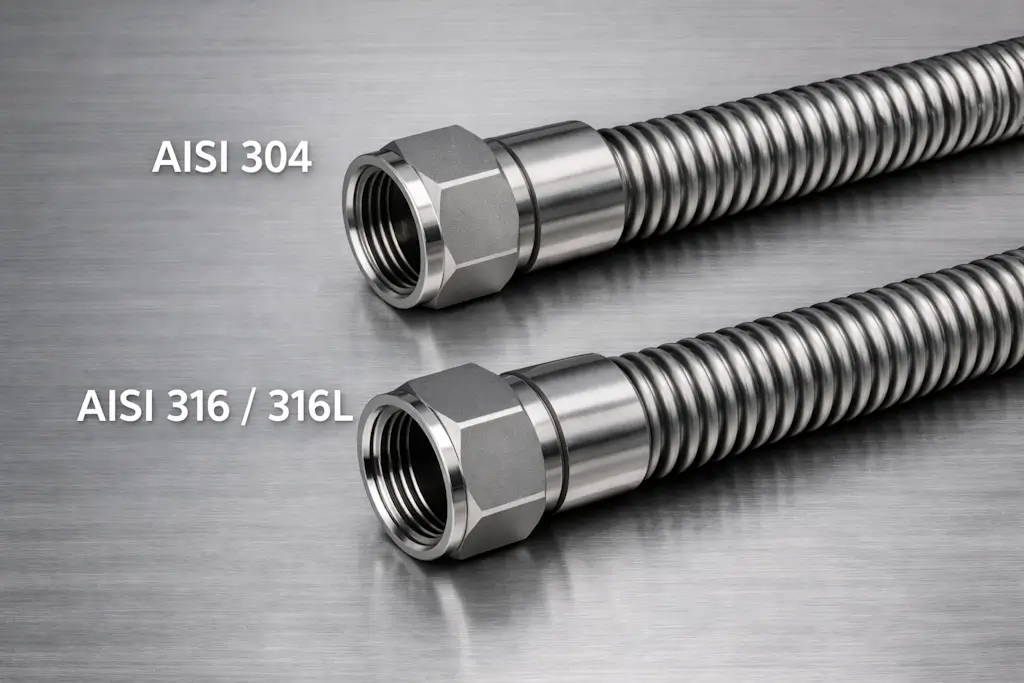
In industrial practice, stainless steel hoses of grades AISI 304 and AISI 316 (including 316L) are most often used. In this review, we will tell you what are their differences, where to use which one and how to choose the best option for your system.
What are AISI 304, 316 and 316L?
The AISI (American Iron and Steel Institute) system is used to label stainless steels. The main grades for hoses are:
- AISI 304 is the most common type of austenitic stainless steel.
- AISI 316 is a modification of 304 with the addition of molybdenum.
- AISI 316L is a variant of 316 with a reduced carbon content.
These steels have excellent corrosion resistance, ductility and mechanical properties, making them optimal for the manufacture of flexible hoses.
Characteristics, chemical composition
Element | AISI 304 | AISI 316 | AISI 316L |
Chrome (Cr) | 18–20 % | 16–18 % | 16–18 % |
Nickel (Ni) | 8–10,5 % | 10–14 % | 10–14 % |
Molybdenum (Mo) | no | ~2–3 % | ~2–3 % |
Carbon (C) | ~0,08 % | ~0,08 % | ≤ 0,03 % |
- Molybdenum in 316 and 316L provides higher corrosion resistance, especially in chloride environments (salts, seawater).
- The reduced carbon content in 316L reduces the risk of seam corrosion after welding.
Advantages and disadvantages
AISI 304
Advantages
- Good corrosion resistance in most environments.
- Excellent machinability and formability.
- Optimal price/quality ratio.
Disadvantages
- Less resistant to aggressive chloride environments and seawater compared to 316.
Typical applications
- Process hoses for water, steam, air.
- General industrial systems.
- Heating and ventilation.
AISI 316
Advantages
- Higher corrosion resistance due to molybdenum.
- Better performance in environments with aggressive salts.
- Higher thermal stability.
Disadvantages
- Higher price than AISI 304.
Typical applications
- Marine systems, ship components.
- Chemical and pharmaceutical processes.
- Highly corrosive environments.
AISI 316L
Advantages
- Minimized risk of corrosion in the weld zone.
- Improved resistance in aggressive environments.
- Ideal choice for critical applications.
Typical applications
- Medical and food equipment.
- Systems with frequent welding operations.
- Enterprises with high sanitary requirements.
Corrosion resistance – comparison
Operating condition | AISI 304 | AISI 316 | AISI 316L |
Fresh water | 👍 | 👍 | 👍 |
Seawater | ⚠️ | 👍 | 👍 |
Salts and chlorides | ⚠️ | 👍 | 👍 |
Nutrient media | 👍 | 👍 | 🏅 |
Chemical reagents | ⚠️ | 👍 | 🏅 |
👍 — recommended | ⚠️ — possible with restrictions | 🏅 — optimal choice
Temperature and mechanical aspects
- Both grades maintain mechanical strength over a wide temperature range.
- AISI 316/316L has better resistance to high temperatures and prolonged loading.
- The design and manufacturing technology of the hose (braiding, reinforcement) also affect the final properties.
How to choose a brand for your hose
Evaluate before choosing:
- Type of medium (aquatic, chemical, marine, food).
- Temperature.
- Pressure in the system.
- Sanitary or regulatory requirements.
- Project budget.
Practical recommendations:
- For standard industrial applications, AISI 304 is sufficient.
- If the system is in contact with aggressive media or seawater, 316 or 316L should be chosen.
- For food, pharmaceutical or medical equipment, 316L is the best option in terms of hygiene and corrosion resistance after welding.
Summary comparison table
Indicator | AISI 304 | AISI 316 | AISI 316L |
Corrosion resistance | Medium | High | Highest |
Sustainability in the marine environment | Medium | High | High |
Post-weld corrosion resistance | Medium | High | High |
Cost | The lowest | Medium | Highest |
Recommended use | General | Aggressive | Critically clean |
Conclusion
The choice of stainless steel grade for hoses is crucial to the reliability, durability and safety of the system.
- AISI 304 is a versatile and economical option for a wide range of environments.
- AISI 316 is the best choice for environments with increased corrosive activity.
- AISI 316L is optimal for critical, high-purity and welding applications.