A gas hose is a key element for the safe connection of gas equipment: a stove, hob, boiler or water heater. Despite its simple design, the tightness of the connection and the safety of the room depend on its condition. Therefore, the issue of the service life of a gas hose is extremely important.
What is the service life of a gas hose?
Service life is the period during which a gas hose can be operated without losing its technical and safety characteristics, provided that it is installed and used correctly. It is set by the manufacturer and is indicated in the product’s passport or technical documentation.
What determines the service life
The service life of a gas hose depends on several main factors:
- Type of hose (rubber, rubber-fabric, corrugated stainless steel).
- Quality of materials and production.
- Operating conditions (humidity, temperature, presence of aggressive environment).
- Proper installation (absence of kinks, tension, mechanical damage).
- Regular inspection and maintenance.
Average service life of different gas hoses
The most common types of gas hoses have different service lives:
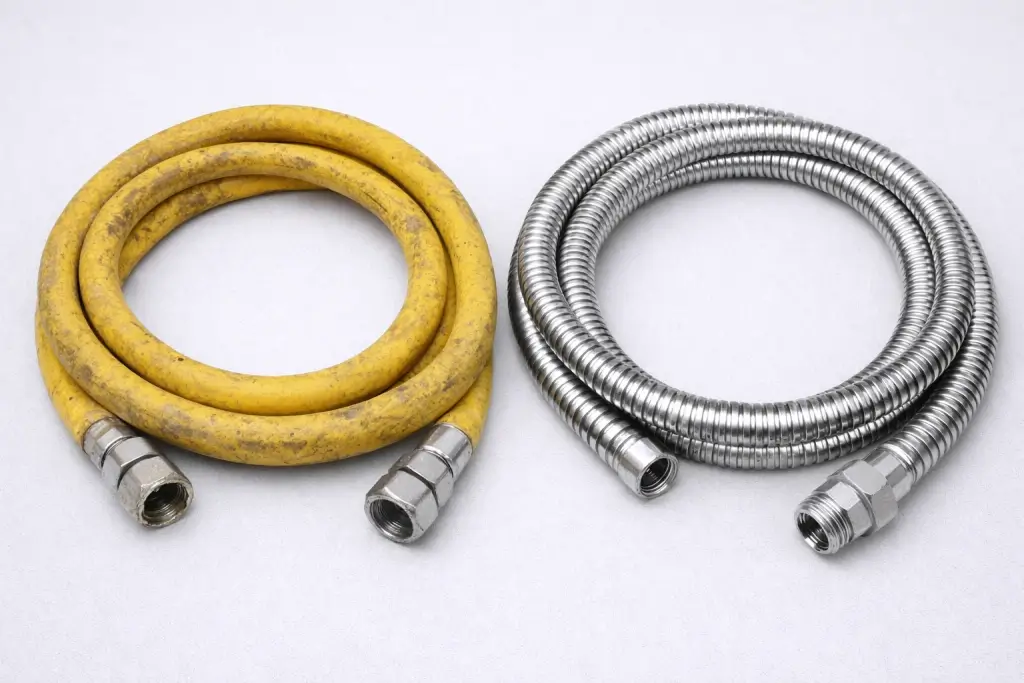
- Rubber and rubber-fabric hoses — on average 3-5 years. Over time, rubber ages, cracks and loses elasticity.
- Reinforced rubber hoses — up to 5 years, provided there is no external damage.
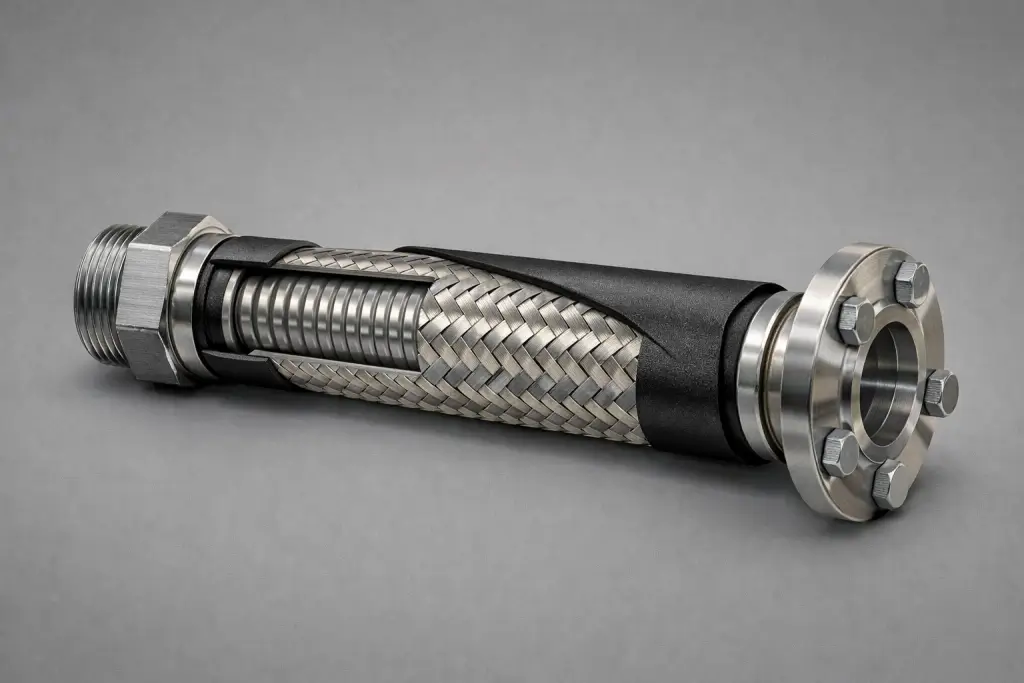
- Corrugated stainless steel gas hoses — 10-15 years or more. They are resistant to temperature extremes, corrosion and mechanical stress.
That is why modern standards and recommendations increasingly prefer stainless steel hoses. Eco-Flex specializes in the production of corrugated stainless steel gas hoses, which provides a long service life and a high level of safety. For Eco-Flex products, the shelf life is calculated taking into account real operating conditions: temperature changes, gas pressure, vibrations and mechanical loads.
Eco-Flex gas hoses: a long-term solution
A significantly longer service life of Eco-Flex corrugated gas hoses made of stainless steel is achieved due to:
- the use of high-quality stainless steel;
- resistance to corrosion and high temperatures;
- ability to withstand pressure and vibration loads;
- reliable threaded connections and fittings.
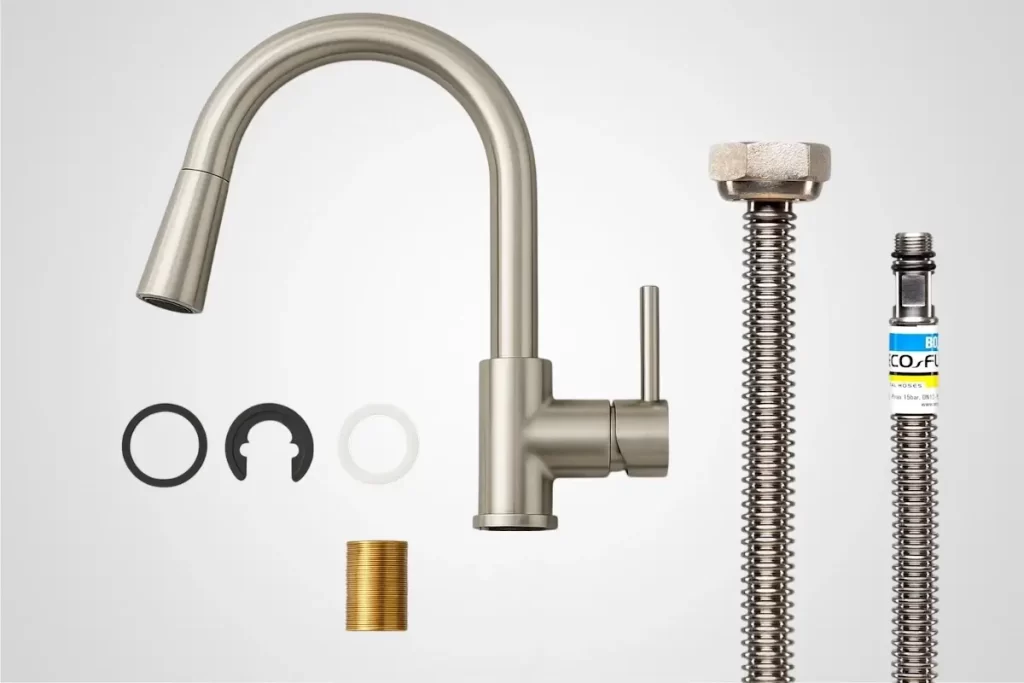
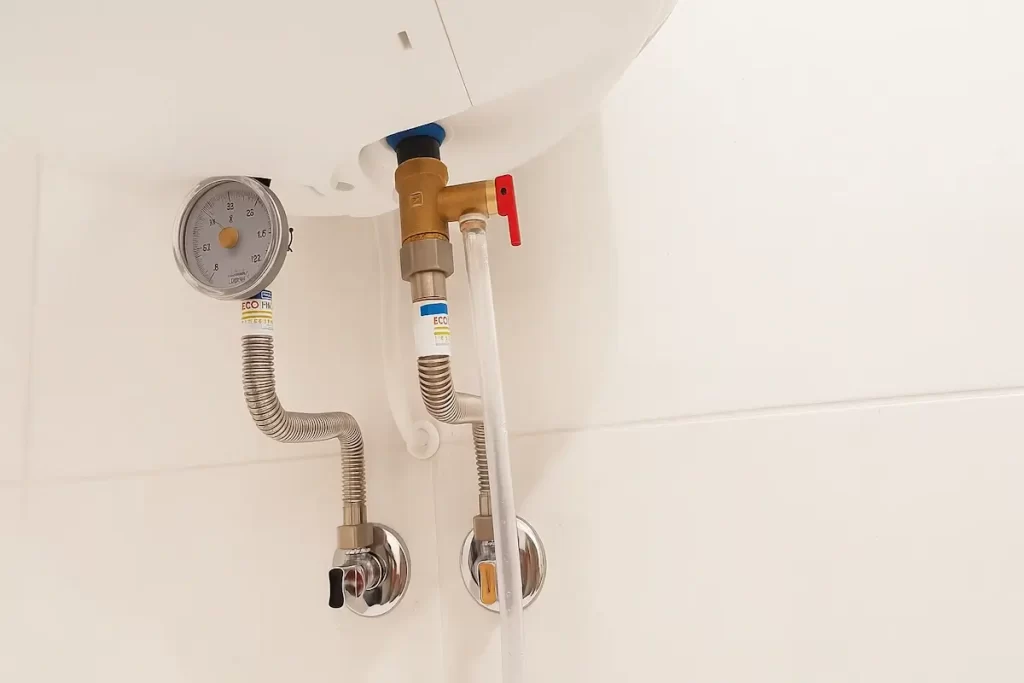
Such hoses are suitable for connecting gas stoves, hobs, boilers, columns and other gas equipment.
Signes that indicate that the gas hose must be replaced
Even if the stated service life of the hose for a gas stove or boiler has not yet expired, the hose must be replaced if the following signs appear:
- cracks, swelling or delamination of the material;
- traces of corrosion or mechanical damage;
- smell of gas near the connections;
- violation of the tightness of the fittings;
- deformation or severe bending of the hose.
Ignoring these signs can lead to gas leaks and emergencies.
How to extend the service life of a gas hose
To ensure that the gas hose serves you as long and safely as possible, it is recommended:
- use only certified products;
- entrust the installation to specialists;
- avoid contact with sharp edges and heated surfaces;
- do not paint or mask the hose;
- periodically check the tightness of the connections.
Conclusion
The service life of a flexible gas hose is not a formality, but an important safety indicator. Timely replacement of a worn hose and the use of high-quality corrugated stainless steel gas hoses significantly reduce the risk of gas leakage and increase the reliability of the gas supply system.
By choosing Eco-Flex gas hoses, you invest not only in a long service life, but also in the safety of your home or facility. Corrugated stainless steel gas hoses are a modern standard of reliability that meets the requirements of professionals and gas services.