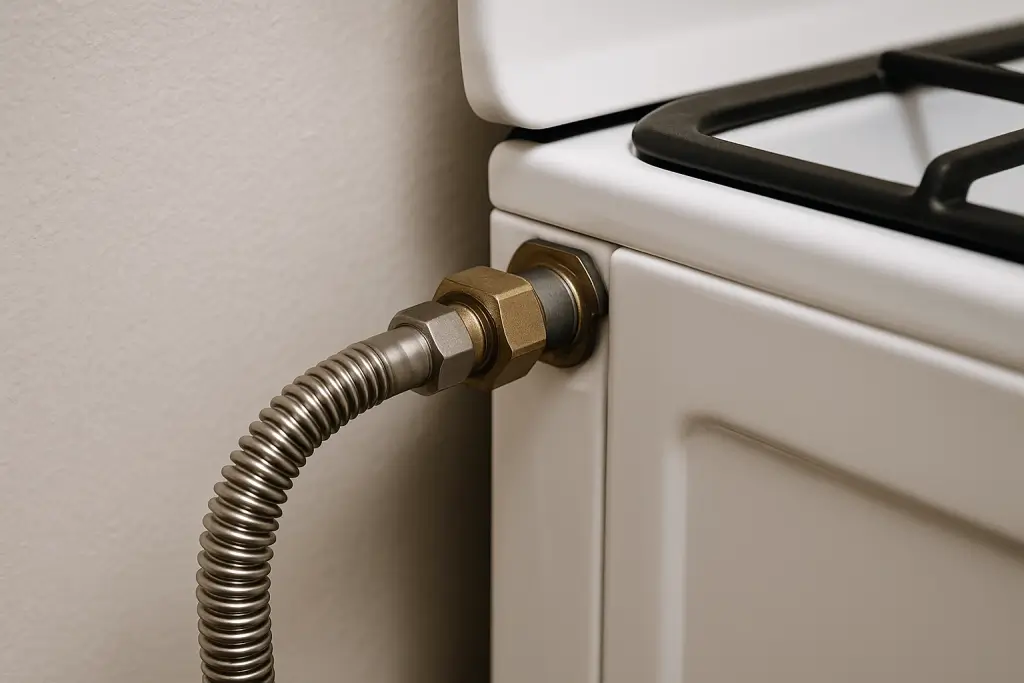
 The reliability and safety of gas systems largely depend on the correctly selected type of gas hose connection. Eco-Flex, a manufacturer of metal hoses and flexible hoses made of high-quality stainless steel, offers a wide range of gas connections adapted to various installation conditions and equipment requirements. Let’s look through the main types of connections, their advantages and areas of application.
Standards and types of threaded connections
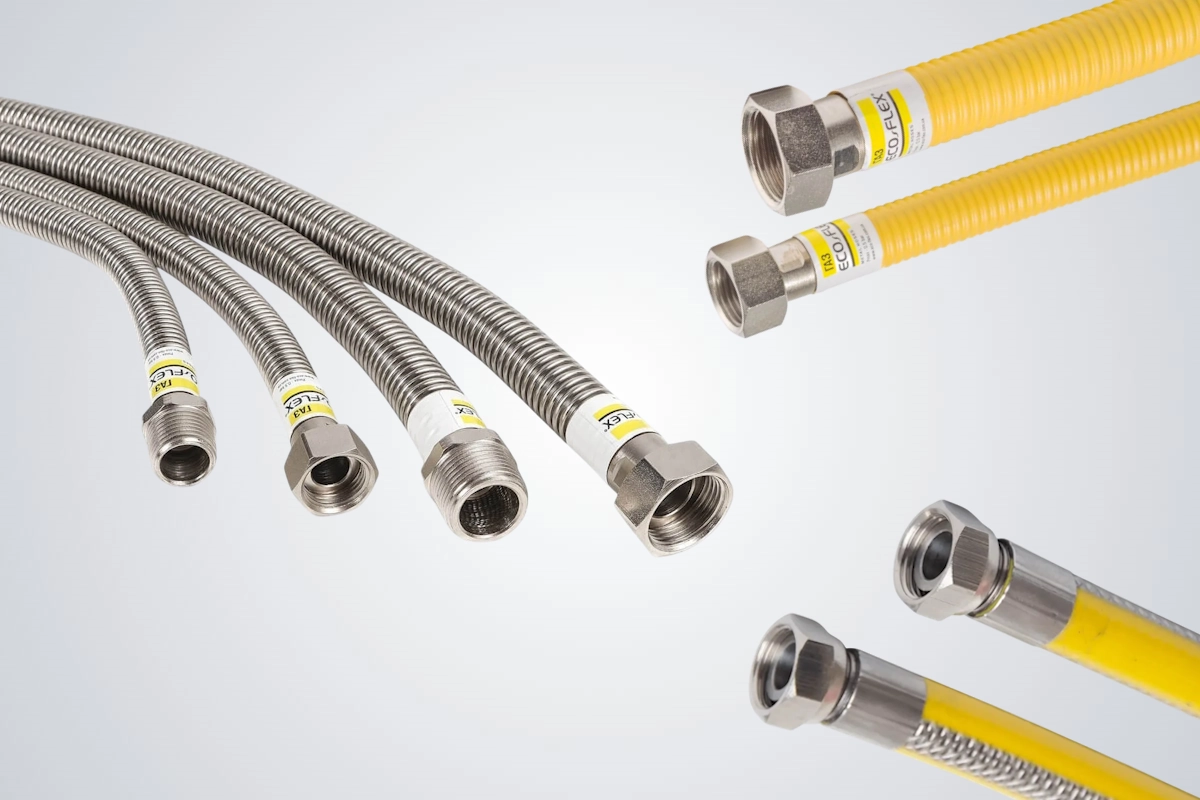
Eco-Flex gas hoses and metal hoses are manufactured taking into account the standard thread sizes used in domestic and professional gas systems. The most common options are:
1. Gas hose 1/2″
This is the most popular format for connecting household equipment:
- cookers;
- cooking surfaces;
- speakers;
- small gas ovens.
Bellows gas hoses 1/2″ from Eco-Flex provide a stable gas supply and can be used with almost any equipment.
2. Gas hose 3/4″
This diameter is used in cases where the equipment consumes more gas or has increased performance. Usually these are:
- professional stoves;
- boilers;
- industrial burners;
- grills and heating installations with increased load.
A flexible gas hose 3/4″ allows you to maintain stable pressure and provide the necessary capacity even in long or complex pipelines.
3. 1 inch gas supply
This is a solution for heavy commercial and industrial equipment. Typically, a 1″ gas line is used:
- in large kitchen complexes;
- in production workshops;
- for equipment with continuous operation.
This size provides maximum throughput and is suitable for systems with high workloads.
4. Types of fittings
Gas hoses are equipped with two types of fittings: union (external thread) and nut (internal thread). Different gas line designs are possible: nut-nut, nut-fitting, fitting-fitting. The choice of fittings depends on the equipment to be connected.
In situations where the equipment is installed close to the wall or access to the connection point is limited, the optimal solution is a gas hose with an angled fitting. Angled connection allows:
- reduce the bending radius of the hose;
- avoid tension or kinks;
- increase installation safety.
With 45° or 90° angle fittings, the connection will be convenient even in difficult operating conditions.
How to choose the right gas hose connection
When choosing, it is important to consider several key factors:
- Type of equipment. Different devices have different throughput requirements. Household appliances usually require 1/2″, while professional systems require 3/4″ or 1″.
- Operating conditions. For systems where vibrations, equipment displacement or long continuous operation are possible, it is recommended to use Eco-Flex metal hoses with increased flexibility and strength.
- Fitting compatibility. The gas hose connection must exactly match the standard threads on the equipment and valves. Eco-Flex produces hoses with both internal and external threads.
The type of gas hose connection is a critical factor for the safety and stability of gas equipment. The Eco-Flex line of flexible gas hoses allows you to choose the optimal solution for any conditions. Flexible metal hoses and a wide selection of fittings ensure easy installation and maximum safety of operation.